Showing posts with label Chevrolet Volt. Show all posts

Saturday, October 9, 2010

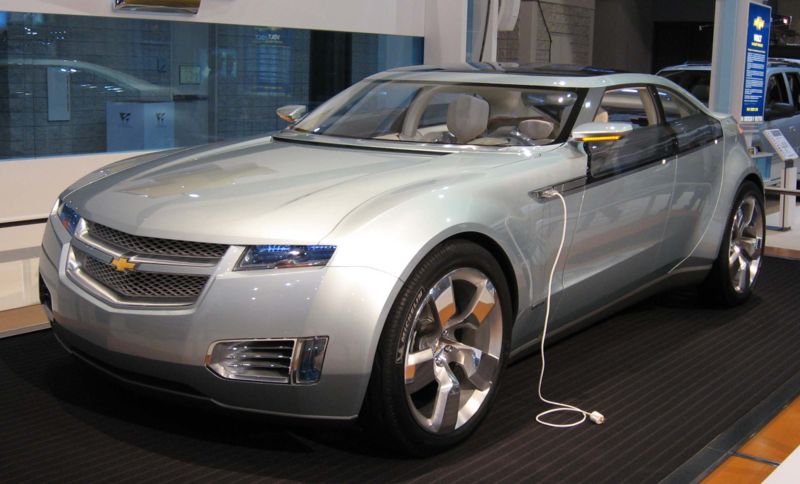
chevrolet volt

chevrolet volt
chevrolet volt
chevrolet volt images
chevrolet volt pictures
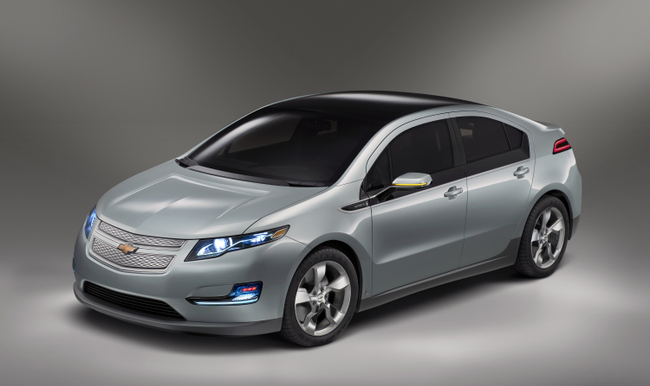
chevrolet volt
chevrolet volt
chevrolet volt images

Saturday, May 9, 2009

GM’s financial troubles won’t impede Chevrolet Volt development

The much anticipated Chevrolet Volt, the car pegged with rescuing GM from impending financial doom, is about to start the next phase of testing despite threats of bankruptcy looming on the horizon. Development work on the Volt is continuing uninterrupted and the first fleet of prototypes with actual Volt bodies and interiors will begin testing by the middle of the year. Until now GM had been using Chevrolet Cruze bodies to test the upcoming Volt powertrain.

At the moment, the car is slated to hit dealerships in late 2010 and this goal appears to be on track. "At this point in time, I know of no reason why we can't be in production by November of 2010," GM product development chief Tom Stephens told Automotive News.

Something that has been delayed, however, is which of the three other surviving GM brands - Cadillac, Buick or GMC - would get a vehicle with the Volt's hybrid powertrain. The most likely option will be Cadillac, which reportedly is planning to produce a version of its Converj plug-in hybrid concept.

GM is also working on the second-generation Volt already, displaying the high hopes that upper management is pinning on the car.

Meanwhile, making the Volt as efficient as possible is of key concern to GM - this means examining every aspect of the car for any points where energy consumption can be reduced. Following this tack, GM is even putting a more frugal stereo in the car to make the Volt's electric-only range as high as possible, among other things.

Along with its current financial troubles, another thorn in the side of GM lies in the expected take-up rate on the Volt, and whether consumers will embrace it as much as upper management is hoping. One of the key concerns in this area is the infrastructure needed for the Volt, such as charging points. Incentives such as free parking in certain places may be put in place to entice customers more readily to the Volt.

Conversely, concerns about infrastructure far outweigh any concerns about the effect on the electrical grid - in fact, the largest problem for the Volt lies in the lack of charging facilities in urban areas where the Volt is most likely to be used. Whatever solution GM comes up for this, it'll have to come quick if the Volt is to be as big a success as they are hoping.

Saturday, March 28, 2009

2010 Chevrolet Volt Price Depend on Gas Price

Volt price will depend on gas price, GM says.

Although the conference call was supposed to be all about the progress on designing batteries for the Chevrolet Volt, the issue of the car's price loomed large in observer's minds.

With a potential asking price that's risen from an estimated $30,000 (U.S.) to a loftier $40,000 for the compact four-seater, Bob Kruse, executive director of the program, gave no specifics on its estimated MSRP, but said the price will depend in part on the cost of gas.

"We're not wishing for higher petroleum costs, but the economic viability of what we're doing only gets greater with higher fuel prices," he said. The plan to launch the car in November, 2010, is on schedule. "$1.50 gallon gas is not helping our business case."

The average price of regular gas in the United States was actually $1.96 a gallon earlier this week, according to American government figures.


GM is not sure what the price of the Volt will be, Kruse said, nor has the company established whether it will lease the battery separately from the vehicle itself, as Nissan plans to do with its all-electric vehicle, which is to go on limited sale next year.

"Part of the price will be dependent on fuel costs at the time, which will impact the value equation the Volt provides."

The focus of the update was on the progress of the lithium-ion battery design — as GM has said, once the battery is ready, the Volt will be ready.

It is the advanced battery technology that allows the Volt to promise up to 64 km (40 miles) of electric-only driving; the small internal combustion engine works only to recharge the batteries, instead of stranding the driver, as would have occurred with GM's ill-fated EV1 all-electric vehicle at the end of its range.


"As we've seen with computers, the technology has progressed to the point where they have morphed from large desktop models, down to the size of your Blackberry," said Denise Gray, director of battery systems engineering, while confirming that design work on generations two and three of the Voltec system is happening alongside the production Volt.

"We're looking for the same types of advancements (and cost reductions) in our electronics."

In a Q&A session afterwards with various media, one astute questioner asked at what temperature those promised 64 kilometres of electric-only driving were verified. Turns out, it was the figure achieved in the normal city cycle testing, said Kruse, which is done at 20 degrees Celsius.

So if your winter commute involves regular sub-zero starts and highway driving, the question isn't whether its electric range will decrease, but by how much?


GM was obviously very sensitive about the fact that the battery cells for the first-generation Volt will come from South Korea, courtesy of LG Chem, especially when it is receiving extra money from both state and federal U.S. governments to produce environmentally advanced vehicles in and around Detroit, on top of the federal bailout money it has and will receive to keep it afloat.

The first batch of pre-production prototypes will be produced later this summer, about 80 of them, soon after the world's largest auto battery facility will open near Detroit, said GM.

Overhyped Nano on sale in India

In yet another media-frenzy-generating launch event, Tata Motor officials confirmed that orders will begin being taken in April in India for the Nano, whose super-low starting price of around $2,900 has media outlets around the world breathlessly reporting on the debut of the "world's cheapest car."

Except it's not the world's cheapest car, it's the world's cheapest new car.

Option it up with various luxuries like a right-side rear view mirror, heating and air conditioning, and a cup holder, and that price moves to 172,360 Indian rupees, according to figures available at tatanano.com, or the equivalent of $4,152.

Still, offering any new vehicle at such a low price is a remarkable achievement, even if the lack of airbags and emissions controls would not allow the Nano as is to be sold in most developed markets, and certainly not in regulation-heavy North America.


"The Nano represents the spirit of breaking conventional barriers," said Tata Motors chairman Ratan Tata. "It will provide safe, affordable, four-wheel transportation to families who till now have not been able to own a car." Or at least a new car.

The Nano offers a 35-hp. two-cylinder engine, coupled to a four-speed manual transmission, with a top speed of 105 km/h, for a published estimate of 33 seconds for the small four-seat hatchback to reach 100 km/h.

Plans are in the works to sell an upgraded version of this car to parts of Europe by 2011, the company said; it would a larger 90-hp, three-cylinder engine, available five-speed automatic, dual airbags, ABS and stability control, with a target starting price still under $5,000 (U.S.).

"Driven mainly by the change in demand that we see elsewhere in the world, we suddenly felt we had a product that could be of considerable interest as a low-cost product in western Europe, eastern Europe, the U.K. and even the U.S.," Tata told Reuters at this week's event.


Women's Car of the Year award launched

Female automotive journalists are a relative rarity in this business, but a group of 10 women auto writers from around the world will launch the first Women's Car of the Year award.

The initial group includes two journalists from Canada, as well as India, South Africa, the U.K., Australia and Europe.

"Most awards are chosen by a huge majority of men who tend to view cars differently to women," said Sandy Myhre, the New Zealand-based journalist who initiated the award.

"This award reflects changing times when you consider that today women make the final decision in as much as 85 per cent of all cars sold," according to Myhre.

After noticing that the 2007 World Car of the Year award's 43-member jury of international auto journalists did not contain one woman, Myhre helped organize a Women's COTY program in New Zealand last year, an award which went to the Volkswagen Passat BlueMotion (diesel) wagon.

"Newton-metres [or lb-ft] of torque weren't even considered, but we did look at drivability and sexiness," for those awards, as well as its carbon footprint, family friendliness, value, and, "of course," the range of colours, said Myhre.
Infiniti M to become brand's first hybrid

Playing some serious catch-up to arch-rival Lexus, Infiniti plans to start selling its own hybrid designs in North America next year, starting with its mid-size M sedans, Japan's Nikkei business daily reports.


While the Altima now offers a hybrid option, the hybrid uses leased Toyota hybrid technology, while Nissan, Japan's third-largest auto maker, struggles to come out with its own hybrid designs to rival those of Toyota and Honda.


Other luxury players are starting to jump into the hybrid market as well, with BMW and Mercedes-Benz both planning hybrid SUVs for North America and Europe this year, as well as the Mercedes-Benz S400 BlueHybrid that will compete with Lexus' top-line LS600hl.

2010 Chevrolet Volt Price Depend on Gas Price

Volt price will depend on gas price, GM says.

Although the conference call was supposed to be all about the progress on designing batteries for the Chevrolet Volt, the issue of the car's price loomed large in observer's minds.

With a potential asking price that's risen from an estimated $30,000 (U.S.) to a loftier $40,000 for the compact four-seater, Bob Kruse, executive director of the program, gave no specifics on its estimated MSRP, but said the price will depend in part on the cost of gas.

"We're not wishing for higher petroleum costs, but the economic viability of what we're doing only gets greater with higher fuel prices," he said. The plan to launch the car in November, 2010, is on schedule. "$1.50 gallon gas is not helping our business case."

The average price of regular gas in the United States was actually $1.96 a gallon earlier this week, according to American government figures.


GM is not sure what the price of the Volt will be, Kruse said, nor has the company established whether it will lease the battery separately from the vehicle itself, as Nissan plans to do with its all-electric vehicle, which is to go on limited sale next year.

"Part of the price will be dependent on fuel costs at the time, which will impact the value equation the Volt provides."

The focus of the update was on the progress of the lithium-ion battery design — as GM has said, once the battery is ready, the Volt will be ready.

It is the advanced battery technology that allows the Volt to promise up to 64 km (40 miles) of electric-only driving; the small internal combustion engine works only to recharge the batteries, instead of stranding the driver, as would have occurred with GM's ill-fated EV1 all-electric vehicle at the end of its range.


"As we've seen with computers, the technology has progressed to the point where they have morphed from large desktop models, down to the size of your Blackberry," said Denise Gray, director of battery systems engineering, while confirming that design work on generations two and three of the Voltec system is happening alongside the production Volt.

"We're looking for the same types of advancements (and cost reductions) in our electronics."

In a Q&A session afterwards with various media, one astute questioner asked at what temperature those promised 64 kilometres of electric-only driving were verified. Turns out, it was the figure achieved in the normal city cycle testing, said Kruse, which is done at 20 degrees Celsius.

So if your winter commute involves regular sub-zero starts and highway driving, the question isn't whether its electric range will decrease, but by how much?


GM was obviously very sensitive about the fact that the battery cells for the first-generation Volt will come from South Korea, courtesy of LG Chem, especially when it is receiving extra money from both state and federal U.S. governments to produce environmentally advanced vehicles in and around Detroit, on top of the federal bailout money it has and will receive to keep it afloat.

The first batch of pre-production prototypes will be produced later this summer, about 80 of them, soon after the world's largest auto battery facility will open near Detroit, said GM.

Overhyped Nano on sale in India

In yet another media-frenzy-generating launch event, Tata Motor officials confirmed that orders will begin being taken in April in India for the Nano, whose super-low starting price of around $2,900 has media outlets around the world breathlessly reporting on the debut of the "world's cheapest car."

Except it's not the world's cheapest car, it's the world's cheapest new car.

Option it up with various luxuries like a right-side rear view mirror, heating and air conditioning, and a cup holder, and that price moves to 172,360 Indian rupees, according to figures available at tatanano.com, or the equivalent of $4,152.

Still, offering any new vehicle at such a low price is a remarkable achievement, even if the lack of airbags and emissions controls would not allow the Nano as is to be sold in most developed markets, and certainly not in regulation-heavy North America.


"The Nano represents the spirit of breaking conventional barriers," said Tata Motors chairman Ratan Tata. "It will provide safe, affordable, four-wheel transportation to families who till now have not been able to own a car." Or at least a new car.

The Nano offers a 35-hp. two-cylinder engine, coupled to a four-speed manual transmission, with a top speed of 105 km/h, for a published estimate of 33 seconds for the small four-seat hatchback to reach 100 km/h.

Plans are in the works to sell an upgraded version of this car to parts of Europe by 2011, the company said; it would a larger 90-hp, three-cylinder engine, available five-speed automatic, dual airbags, ABS and stability control, with a target starting price still under $5,000 (U.S.).

"Driven mainly by the change in demand that we see elsewhere in the world, we suddenly felt we had a product that could be of considerable interest as a low-cost product in western Europe, eastern Europe, the U.K. and even the U.S.," Tata told Reuters at this week's event.


Women's Car of the Year award launched

Female automotive journalists are a relative rarity in this business, but a group of 10 women auto writers from around the world will launch the first Women's Car of the Year award.

The initial group includes two journalists from Canada, as well as India, South Africa, the U.K., Australia and Europe.

"Most awards are chosen by a huge majority of men who tend to view cars differently to women," said Sandy Myhre, the New Zealand-based journalist who initiated the award.

"This award reflects changing times when you consider that today women make the final decision in as much as 85 per cent of all cars sold," according to Myhre.

After noticing that the 2007 World Car of the Year award's 43-member jury of international auto journalists did not contain one woman, Myhre helped organize a Women's COTY program in New Zealand last year, an award which went to the Volkswagen Passat BlueMotion (diesel) wagon.

"Newton-metres [or lb-ft] of torque weren't even considered, but we did look at drivability and sexiness," for those awards, as well as its carbon footprint, family friendliness, value, and, "of course," the range of colours, said Myhre.
Infiniti M to become brand's first hybrid

Playing some serious catch-up to arch-rival Lexus, Infiniti plans to start selling its own hybrid designs in North America next year, starting with its mid-size M sedans, Japan's Nikkei business daily reports.


While the Altima now offers a hybrid option, the hybrid uses leased Toyota hybrid technology, while Nissan, Japan's third-largest auto maker, struggles to come out with its own hybrid designs to rival those of Toyota and Honda.


Other luxury players are starting to jump into the hybrid market as well, with BMW and Mercedes-Benz both planning hybrid SUVs for North America and Europe this year, as well as the Mercedes-Benz S400 BlueHybrid that will compete with Lexus' top-line LS600hl.